


What Is ESG? The Complete Guide for Thai SMEs in 2026
What Is ESG? The Complete Guide for Thai SMEs in 2026 — Turn Compliance into Competitive Advantage
ESG for Thai SMEs is no longer discretionary. In 2025, the Bank of Thailand issued unambiguous guidance that “Green Loans” will become a primary criterion for credit approval, with the Thailand Taxonomy entering full force in 2026 — directly reshaping how Thai businesses access capital. Whether you manufacture automotive components in Samut Prakan or export processed fruit from Chanthaburi, ESG (Environment, Social, Governance) has become the single most consequential framework determining your firm’s survival and growth in global supply chains.
Why Thai SMEs Cannot Escape ESG
Historically, Thai SME owners regarded environmental and social issues as the province of publicly listed companies, or as charitable activities (CSR) undertaken when surplus profits allowed. That calculus has fundamentally shifted. Thailand’s 3.1 million SMEs — representing 99.5% of all enterprises — now face three simultaneous structural forces that render ESG inaction an existential risk:
- International customers (EU, US, Japan) now routinely require ESG audit results before renewing supplier agreements.
- Banks are beginning to decline credit applications — or impose punitive interest rates — where no ESG Score is present.
- Global regulation, notably the EU’s Carbon Border Adjustment Mechanism (CBAM), will commence actual carbon charges on Thai goods entering Europe from 1 January 2026. [2]
The good news: ESG is not merely a cost — it is quantifiable profit, provided you know the mechanism. Revenue from selling carbon credits (THB 40–80 per tonne), combined with a 1–2% reduction in loan interest rates, can materially improve your bottom line. This guide synthesises verified data from OSMEP, TGO, and BOI into an immediately actionable framework.
From “Optional” to “Essential”: ESG Landscape in Thailand 2026
According to the Thai Bond Market Association, Thailand’s sustainable finance mobilisation has surged to THB 720 billion. [3] Capital is flowing towards businesses that take environmental stewardship seriously. For SMEs, a carbon label or CFO certification has become a baseline expectation that trading partners raise from the first day of negotiations — not an afterthought.
ESG Is Not Just for Conglomerates: Opportunities and Risks for Smaller Players
Many business owners assume ESG demands enormous capital outlays. In practice, SMEs possess a structural advantage: agility. Initiating ESG at scale — replacing lighting, separating waste streams — delivers immediate cost reductions and a visible bottom-line impact faster than at large corporations. The key is knowing where to start.
Deep Dive — E for Environment: The First Gate Every SME Must Open
For Thai SMEs, the E (Environment) pillar is the most immediately tangible entry point, because reducing energy consumption is structurally equivalent to reducing operating costs — a proposition that requires no persuasion from any boardroom.
GHG Accounting: What It Is and Why It Matters
Just as you maintain profit-and-loss accounts, ESG compliance begins with a “greenhouse gas account” — formally known as a Carbon Footprint for Organization (CFO). Think of it as a corporate health-check quantifying how much invisible waste your operations generate.
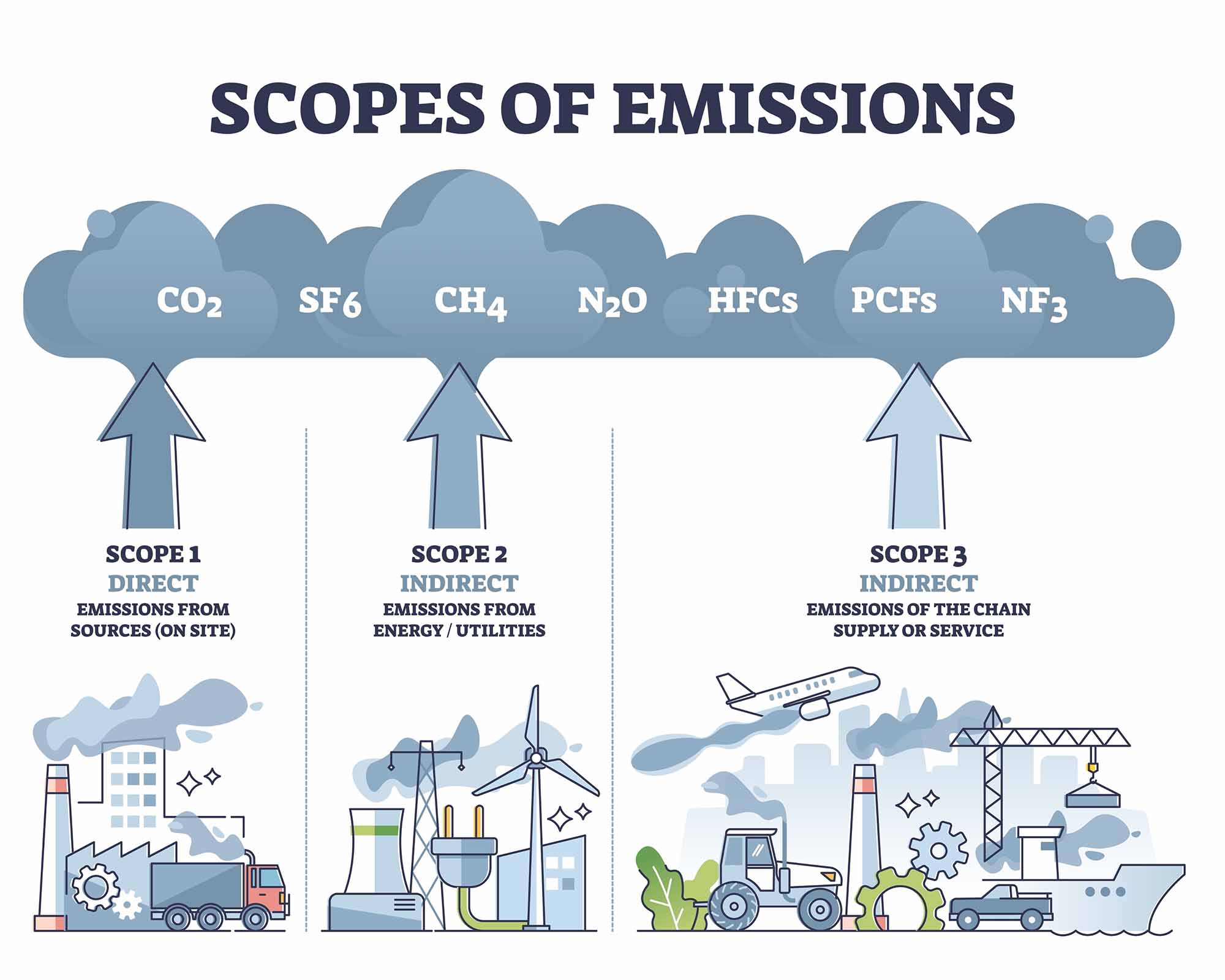
Under the globally recognised GHG Protocol, emissions are classified into three scopes that every Thai SME owner must understand:
- Scope 1 (Direct Emissions): Fuel consumed by company vehicles, LPG, and refrigerant leaks from air-conditioning systems — typically accounting for approximately 60% of emissions in manufacturing SMEs.
- Scope 2 (Indirect — Energy): Monthly electricity bills — approximately 30% of a typical SME’s total emissions. This is the easiest category to reduce and should be your first target.
- Scope 3 (Indirect — Other): Employee commuting, outsourced logistics, and waste disposal — frequently overlooked, yet increasingly scrutinised by international trade partners conducting supply-chain due diligence.
How to Calculate Your Carbon Footprint (CFO) Using Free TGO Tools
There is no need to engage an expensive consultant at the outset. The Thailand Greenhouse Gas Management Organization (TGO / อบก.) provides a free, government-accredited calculation tool:
- Download: Access the calculator at TGO Carbon Footprint Calculator.
- Input data: Enter your electricity bills, fuel receipts, and estimated waste volumes for the preceding 3–6 months.
- Output: The system calculates your total emissions in tonnes of CO₂ equivalent (tCO₂e) and issues a preliminary certificate within 7 working days.
💡 SME Tip: Focus exclusively on Scope 1 and 2 first. They are the simplest to manage, and reductions here translate directly into lower operating costs.
Thailand’s Carbon Credit Market and T-VER: Turn Your Factory Roof into Revenue
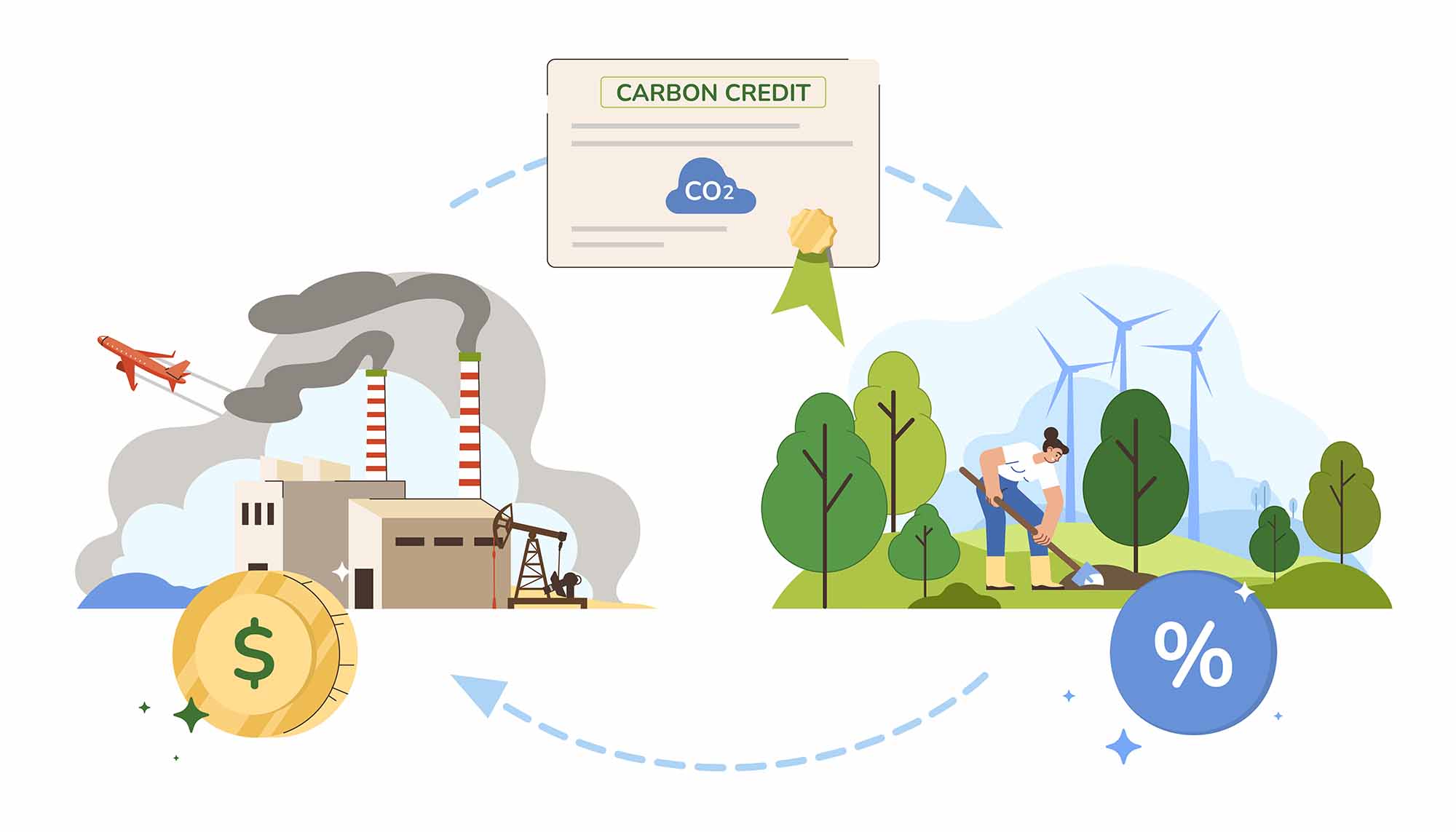
Thailand operates the T-VER (Thailand Voluntary Emission Reduction) programme, administered by TGO. Once you have verifiably reduced your emissions, the surplus reduction can be registered and sold as carbon credits on Thailand’s voluntary carbon market.
- Market rate: Carbon credits in Thailand currently trade at approximately THB 40–80 per tonne of CO₂, depending on project type. [4]
- Illustrative calculation: A 100 kW Solar Rooftop installation can reduce emissions by approximately 120 tonnes per year, generating supplementary revenue of THB 4,800–9,600 annually — in addition to electricity savings that may exceed THB 100,000 per year.
Circular Economy and the BCG Model
Aligned with Thailand’s national BCG Model policy, the government has earmarked over THB 5 billion in support for SMEs transitioning to Circular Economy practices. [5]
- Core principle: Not merely recycling — but achieving Zero Waste, where all by-products feed back into the production cycle.
- Practical example: A fruit-processing factory channelling fruit-peel waste into biogas anaerobic digestion can eliminate 80% of its waste disposal costs while generating sufficient electricity to partially power its own facilities.
New Laws You Must Know: Carbon Tax and EPR
Two legislative developments will materially affect Thai SME cost structures before the end of the decade:
- Carbon Tax: Thailand’s Excise Department is piloting a carbon pricing mechanism for 2026, at a proposed rate of approximately THB 200 per tonne — embedded in the price of fuel and energy inputs. SMEs that have already reduced their carbon footprint will pay proportionally less.
- EPR (Extended Producer Responsibility): Legislation requiring producers to assume financial responsibility for post-consumer packaging disposal is expected to take effect in 2025. Non-compliance penalties could reach THB 2 million per breach. [6]

Case Study 1 — Thai Fruit Processing Factory: “Thai Rung Rueang”
To illustrate how ESG converts compliance obligations into measurable financial gains, consider the following composite drawn from documented outcomes in the processed-food manufacturing sector.
Business Profile:
- Name: Thai Fruit Process Partnership (fictionalised: “Thai Rung Rueang”), Chanthaburi Province
- Scale: Mid-tier SME (annual revenue: THB 180 million)
- Challenges: Electricity costs of THB 1.2 million per month; 300 tonnes of durian/mangosteen peel waste per month requiring paid disposal by third-party contractors
ESG Interventions Applied:
- Energy Transition: Secured a Green Loan at 1.5% interest to install a 500 kW Solar Rooftop system.
- Circular Economy: Invested in a biogas digestion system converting fruit-peel waste into electricity for on-site consumption.
- Income Generation: Registered a T-VER project with TGO to monetise verified emission reductions.
Outcomes Achieved:
- ✅ Cost reduction: Electricity expenses fell by 70% (approximately THB 15 million per year); full capital payback within 3–4 years.
- ✅ New revenue stream: Carbon credit sales generated THB 8 million per year from the dramatic reduction in waste-related emissions.
- ✅ Market access: Carbon Footprint labelling enabled European export certification, driving a 40% increase in sales volume as international buyers gained confidence in the supply chain.
ESG Evolution and Key Standards: What Every Thai SME Must Understand
From CSR to ESG — understanding the distinction is foundational for any business owner committed to sustainable growth.
| Dimension | CSR (Traditional) | ESG (Contemporary Standard) |
|---|---|---|
| Objective | Philanthropy / profit redistribution | Business strategy / systematic risk mitigation |
| Measurement | Sentiment-based (donation made = task completed) | Quantitative KPIs — measurable targets, real-time data |
| Frequency | Episodic / campaign-based | Continuous / embedded in operations |
| Return | Reputational value only | Sustained profit growth / reduced borrowing costs |
Global and Thai Standards That Directly Affect Your Bottom Line
- SDGs (UN Sustainable Development Goals): Of the 17 Goals, three are most operationally relevant for Thai SMEs: SDG 7 (Affordable and Clean Energy), SDG 12 (Responsible Consumption and Production), and SDG 13 (Climate Action). Aligning your ESG roadmap with these goals strengthens credibility with international partners.
- CBAM (Carbon Border Adjustment Mechanism): The EU’s landmark carbon tariff instrument applicable to cross-border imports.
- Effective date: 1 January 2026 — full charge commencement
- Products at risk: Steel, aluminium, cement, fertilisers, electricity, hydrogen
- Practical impact: If your business supplies any entity in these sectors, you must have CFO data ready immediately. Without verified carbon data, your goods will be assessed at the default (punitive) carbon cost by your customer’s customs authority. [7]
- Thailand Taxonomy: The Bank of Thailand’s green activity classification framework, determining which business activities qualify for preferential Green Loan financing. If your operations fall within the 120 qualifying activity categories, you become eligible for easier access to credit at materially lower rates. [1]
Case Study 2 — Prasit Yontrakarn Co., Ltd.
Business Profile:
- Name: Prasit Yontrakarn Partnership (bolt and screw manufacturer, Samut Sakhon Province)
- Scale: Small SME (annual revenue: THB 40 million)
- Challenge: The parent company — a Tier 1 supplier to a Japanese automotive OEM — announced a Carbon Neutrality policy and issued an ultimatum: suppliers without an ESG roadmap would be removed from the vendor list within 12 months.
ESG Solutions Deployed:
- Social (S): Migrant worker employment contracts were brought into full legal compliance; mandatory workplace safety training was implemented and documented.
- Environment (E): The TGO Calculator was used to establish a baseline carbon inventory; all factory lighting was replaced with LED systems, reducing Scope 2 emissions by approximately 18%.
- Reporting: A two-page condensed ESG progress report was attached to every monthly invoice, demonstrating measurable improvement to the parent company’s sustainability procurement team.
Outcomes Achieved:
- 🎯 Achieved a Gold-tier rating in the parent company’s ESG supplier audit.
- 🎯 Secured an SCB Green SME Loan of THB 100 million at 1.75% interest for capacity expansion. [8]
- 🎯 Reduced manufacturing waste by 40%; scrap metal sales generated THB 1.2 million in additional annual revenue.
ESG Ratings and Funding: Do Good, Get Rewarded
The New Credit Scoring: Banks Now Look Beyond Financial Statements
Leading Thai commercial banks — including Bangkok Bank, KasikornBank, and SCB — have begun integrating ESG Credit Scoring into their lending decisions. Businesses with an ESG score above 60, indicating low environmental risk, qualify for interest rate discounts of 0.5–1.0% relative to standard lending rates. [8]
This represents a structural shift: your environmental performance is now a financial instrument, directly reducing your cost of capital. For SMEs operating on thin margins, a 1% interest reduction on a THB 50 million loan translates into THB 500,000 in annual savings — dwarfing the cost of basic ESG compliance measures.
Where to Find Funding: Thailand’s ESG Financial Support Ecosystem
Both public and private sector institutions have committed substantial capital to support ESG-ready SMEs:
- BOI (Board of Investment) — “Smart & Sustainable Industry” Scheme: Three-year corporate income tax exemption and full customs duty waiver on imported energy-efficient machinery for qualifying projects. [2]
- Green Loan Products:
- SCB Green SME Loan: Interest rates from 1.5–2.5%; maximum facility of THB 500 million.
- KBank BCG Loan: Special rate of 1.75%; designed specifically for Solar Rooftop and energy efficiency projects.
For a detailed overview of how digital transformation intersects with ESG compliance obligations, see Kooru’s guide on Digital Transformation for Thai Business.
Free Resources and Tools for Thai SMEs
To accelerate your ESG initiation without upfront consulting costs, the following government and exchange-operated tools are available immediately:
✅ Carbon Footprint Calculator (Free): TGO Carbon Calculator
✅ Online Learning: SET ESG Academy — free certified courses in Thai and English
✅ SME Toolkit: OSMEP ESG Toolkit — step-by-step implementation guides
✅ Carbon Credit Trading Portal: T-VER Portal — project registration and credit trading
5-Step Action Plan: How Thai SMEs Can Start ESG Today
Key principles to carry forward:
- Starting today is the lowest-cost option: Regulatory requirements tightening throughout 2026 will make delayed compliance progressively more expensive.
- Focus on Scope 1 & 2 first: Reducing electricity and fuel consumption alone satisfies the threshold requirements for initial ESG qualification.
- Use free tools before engaging consultants: TGO and OSMEP instruments are sufficient for the assessment and early reduction phases.
Practical Implementation Timeline:
- Week 1: Run the TGO Calculator using your most recent electricity bill as a starting data point — no additional preparation required.
- Month 1: Set a 10% electricity reduction target through LED lighting upgrades and air-conditioning timer controls.
- Month 3: If a Solar Rooftop investment is under consideration, register a T-VER project with TGO.
- Month 6: Prepare a one-page condensed ESG summary report for submission to banks or international trading partners.
ESG is not a choice — it is the only viable path for Thai SMEs competing in the global marketplace.
For legal and governance considerations relevant to your ESG programme, explore Kooru’s resources on Corporate Governance for Thai Businesses.
Ready to Transform Your Business into a Sustainability Leader?
The commercial environment is shifting. Environmental compliance is no longer a distant consideration — it is an immediate competitive variable. If you need to retain customers, export without friction, and access preferential credit, beginning your ESG journey is the decisive action required.
Do not wait for regulatory compulsion. Starting today is simpler than you think.
🚀 Option 1: Calculate Your Carbon Footprint Now (Free)
No consultant required. Use the TGO tool to conduct an initial “business health-check” on your environmental performance.
- What you will gain: Your baseline emissions figure and the specific operational areas where cost reductions are achievable immediately.
- 👉 Access the TGO Carbon Calculator
📥 Option 2: Download the “SME ESG Checklist 2026”
A consolidated action list covering documents required for bank submission and practical preparation for CBAM carbon charges.
- What you will gain: A concise PDF guide — read it once, begin implementation immediately.
- [👉 Download the Free Checklist]
Frequently Asked Questions
1. What Is ESG and How Does It Affect Thai SMEs?
ESG refers to the three core pillars of sustainable business practice: Environment, Social, and Governance — a framework designed to generate long-term value creation rather than short-term profit extraction.
For Thai SMEs, ESG is directly linked to supply chain survival. International buyers — particularly those in the EU and Japan — are increasingly mandating ESG compliance from their suppliers. Failure to meet these standards risks exclusion from vendor lists and the loss of international orders. Additionally, Thai commercial banks are incorporating ESG criteria into their Green Loan approval processes, offering 1–2% interest reductions for qualifying businesses.
2. How Is ESG Different from CSR?
The fundamental distinction lies in “objective” and “measurability.” CSR (Corporate Social Responsibility) typically comprises discrete philanthropic activities — donations, tree-planting events — conducted separately from core business operations and only when surplus profit exists.
ESG, by contrast, is a business strategy embedded within daily operations, with quantifiable performance targets (e.g., electricity cost reduction in THB, reduction in workplace incidents per quarter). ESG directly improves operational efficiency and reduces business risk, producing a measurable impact on the bottom line rather than reputational value alone.
3. What Steps Does an SME Need to Take to Start an ESG Programme?
A pragmatic five-phase approach requires minimal initial investment:
- Educate: Access free foundational knowledge from SET ESG Academy or OSMEP’s online resources.
- Assess: Compile 6–12 months of electricity, fuel, and waste data to establish your baseline.
- Reduce: Implement low-cost measures — LED lighting replacement, equipment maintenance schedules, waste segregation — targeting Scope 1 and 2 first.
- Offset: Where capital is available, invest in Solar Rooftop systems to reduce electricity costs and generate carbon credits for sale under T-VER.
- Report: Communicate progress via a condensed ESG summary report shared with trading partners and banks to build institutional confidence.
4. Is Calculating a Carbon Footprint (CFO) Complicated? Can an SME Do It Internally?
For most SMEs, it is straightforward and can be completed internally at the outset. TGO provides a free, government-accredited TGO Carbon Footprint Calculator that requires no specialist expertise to operate.
You need only three categories of input data: electricity bills, fuel receipts, and estimated waste volumes. The system automatically computes your total emissions in tonnes of CO₂ equivalent (tCO₂e), generating output sufficient for initial planning and cost-reduction analysis. Should formal certification be required for export purposes, engaging an accredited verifier at that stage remains a manageable and justified expense.
5. How Much Does an ESG Programme Cost? Is It Prohibitive for Small Businesses?
A meaningful ESG programme can begin with a zero-baht investment by focusing on operational process improvements: switching off equipment when not in use, implementing waste sorting, ensuring employees receive legally required welfare entitlements.
Where capital investment is warranted — Solar Rooftop installation, energy-efficient machinery replacement — costs may range from hundreds of thousands to several million baht, but the energy savings ROI typically delivers full capital payback within 3–5 years. BOI tax exemptions and Green Loan preferential rates materially reduce the effective financial burden. ESG investment is therefore a strategic cost-reduction mechanism, not discretionary expenditure.
6. Will Not Having an ESG Programme Really Make It Harder to Get a Bank Loan?
Yes — and the constraint will intensify progressively. The Bank of Thailand’s Thailand Taxonomy framework, entering full effect in 2026, compels commercial banks to structure their lending portfolios with environmental risk weighting as a mandatory consideration.
SCB, KBANK, and BBL have already deployed ESG Scoring within their credit assessment workflows. Businesses lacking ESG data are classified as elevated-risk borrowers — potentially facing loan rejection or interest rate penalties of 0.5–1.0% above the rates offered to ESG-compliant competitors. Over a multi-year loan term, this differential represents a substantial financial disadvantage.
7. Which Products Must Be Prepared for CBAM Carbon Charges?
The EU’s Carbon Border Adjustment Mechanism (CBAM) will commence actual charge collection on 1 January 2026. The initial product categories bearing the highest exposure are:
- Steel and iron products
- Aluminium
- Cement
- Fertilisers
- Electricity
- Hydrogen
If your business manufactures these products, or serves as a supplier to manufacturers in these categories, you must immediately compile Carbon Footprint data. Without verified CFO documentation, your goods will be assessed at a default carbon cost by the importing country’s customs authority — a default that is structured to be punitive by design.
8. Is Selling Carbon Credits via T-VER Commercially Viable for an SME?
Viability depends primarily on the volume of emission reductions achieved. For SMEs reducing less than 100 tonnes of CO₂ per year, the revenue from carbon credit sales will generally be insufficient to cover the validation and verification costs charged by accredited third-party verifiers.
In such cases, the optimal financial strategy is to prioritise self-consumption of avoided costs — using generated electricity on-site rather than selling credits. However, for mid-sized and larger SMEs, or for businesses aggregating credits through an intermediary platform, the prevailing T-VER market rate of THB 40–80 per tonne represents a commercially attractive supplementary income stream that meaningfully accelerates the payback period for Solar Rooftop capital investment.
9. Which Bank Offers the Best Green Loan for Thai SMEs, and What Are the Interest Rates?
Green Loan facilities are now available from virtually all major Thai commercial banks. The most prominent current products include:
- SCB Green SME Loan: Financing up to 100% of project value; interest rates starting at 1.5–2.5%; repayment terms up to 7 years.
- KBank BCG Loan: Tailored to Solar Rooftop and energy efficiency projects; special rate of 1.75% in Year 1.
We recommend preparing an environmental investment plan or a preliminary CFO certificate before approaching your primary banking relationship. Presenting concrete, quantified data positions you significantly more favourably in interest rate negotiations. Note that product terms are subject to periodic revision by individual institutions.
10. Do Service Businesses or Small Retail Shops Also Need to Implement ESG?
Yes — though the emphasis differs materially from manufacturing operations. Hotels, restaurants, and office-based businesses may generate lower direct production emissions, but each has meaningful ESG levers available across all three pillars:
- E (Environment): Food waste reduction programmes, compostable packaging adoption, building-level electricity conservation measures.
- S (Social): Fair employment practices, statutory social security compliance, documented workplace safety protocols.
- G (Governance): Transparent accounting practices, full tax compliance, documented internal controls.
For service businesses, ESG implementation builds a credible “sustainability brand” that demonstrably attracts younger domestic consumers and international visitors — generating measurable revenue uplift through brand differentiation rather than regulatory compliance alone.
References
- Bank of Thailand. (2025). Thailand Taxonomy Phase 2: Green Activity Classification Standards. Retrieved from https://www.bot.or.th [Accessed: 30 January 2026]
- Board of Investment (BOI). (2024). Smart & Sustainable Industry — Investment Promotion Guidelines (ESG). Retrieved from https://www.boi.go.th
- Thai Bond Market Association (ThaiBMA). (2024). Thailand Sustainable Finance Market Status Report. Retrieved from https://www.thaibma.or.th
- Thailand Greenhouse Gas Management Organization (TGO). (2025). Thailand Voluntary Carbon Market Summary Report (T-VER). Retrieved from http://carbonmarket.tgo.or.th
- National Science, Research and Innovation Policy Council (NXPO). (2024). BCG Economy Model and Action Plan 2021–2027. Retrieved from https://www.bcg.in.th
- Pollution Control Department. (2024). Draft Act on Sustainable Packaging Management (EPR). Ministry of Natural Resources and Environment.
- Department of Trade Negotiations. (2024). EU Carbon Border Adjustment Mechanism (CBAM) — Impact Assessment for Thailand. Retrieved from https://www.dtn.go.th
- Bangkok Bank and SCB SME. (2024). Green and Sustainability-Linked Loan Programmes. Retrieved from https://www.bangkokbanksme.com and https://www.scb.co.th
By: Khun Phuwara — Senior Advisor, Business Strategy & Legal-Tech, The Kooru
Focus Keyword: “ESG for Thai SMEs”
Secondary Keywords (LSI): “what is ESG”, “Carbon Footprint for Organization”, “Green Loan Thailand”, “T-VER carbon credits”, “Thailand Taxonomy 2026”