

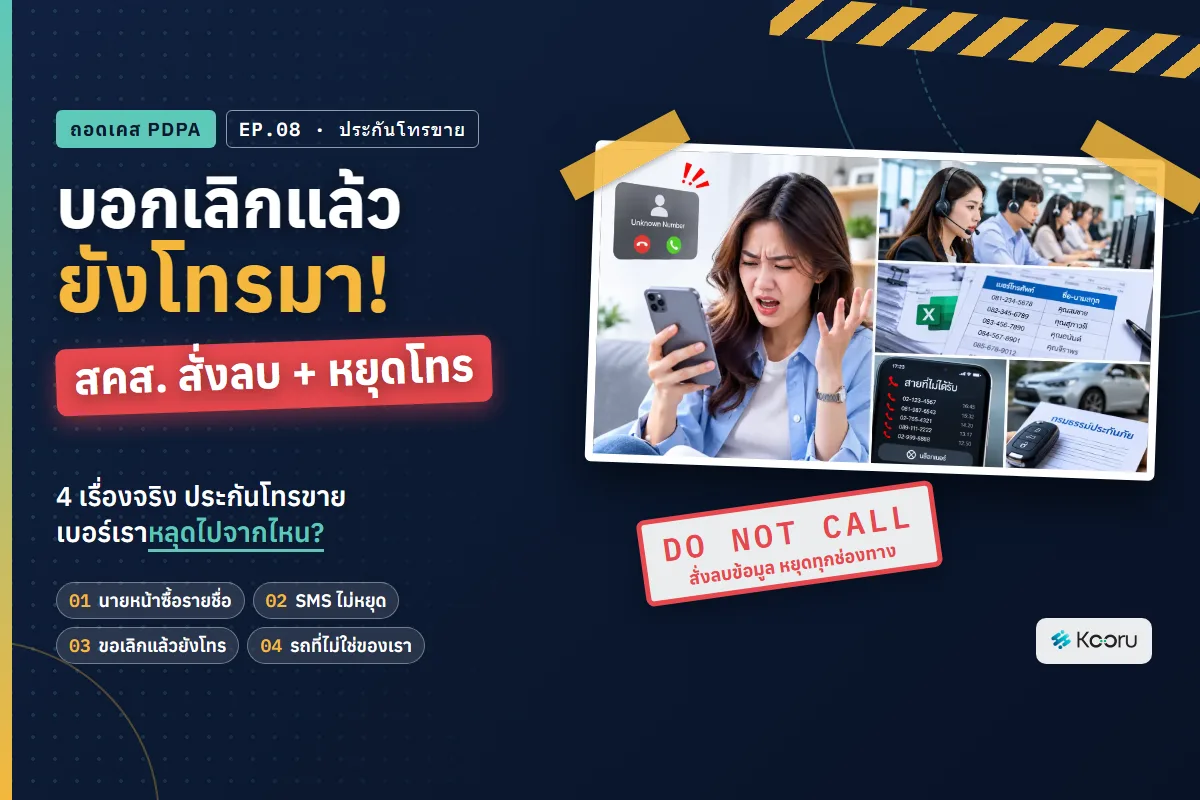
Introduction: “Where did you get my number?” The question nobody answers
A man received a call from an insurance broker he had never dealt with. He asked where they got his number and told them to stop contacting him on every channel. The broker did nothing. He complained, and the broker’s answer to the Expert Committee is worth reading twice.
“We obtained the number from another company under a marketing data purchase agreement.”
His number had been collected when he joined a marketing programme on 30 August 2010. About 13 years later it had been sold on and came back to his phone as an insurance sales call.
The result: the Expert Committee ordered the broker to delete his data, notify him of the source, and rebuild its compliance processes within 30 days.
The other three cases in this episode also start with a call nobody asked for.
- A company admitted it had collected a customer’s number “by mistake”. It had already deleted it, and it was still ordered to fix things.
- A customer of an insurance comparison website said she did not want to be contacted on any day, including Sundays and public holidays. Staff still called.
- A woman received renewal calls for car insurance on a car she did not own. She asked for deletion, received an email confirming it, and 11 months later the calls came back.

Have you had a call like this? And if you run a business with a telesales team, ask yourself: where does the list your team calls every day come from, and when a customer says stop, does your system actually stop?
This is EP.08 of the “PDPA case files” series and the first episode of a new arc, “Your data in the hands of banks and insurers”. If you are new here, the closest earlier episode is EP.06 on pre-ticked consent and erasure requests, and the previous one is EP.07 on identity misuse.
Is it a PDPA breach when an insurer calls to sell without your consent?
It can be, if the company has no legal basis to use your number, or obtained it from another source without notifying you and getting your consent, and it becomes clearer still when you have told them to stop and they keep calling. In two of the four cases here, the Committee found the company had not complied with the PDPA and ordered the data deleted.
A phone number that identifies you is personal data. Dialling it to sell you something is a “use” of personal data in law, which needs a basis under Section 24 or consent under Sections 19 and 27. Four rules matter most for sales calls.
| Section | Rule | How it applies to sales calls |
|---|---|---|
| 19 | Consent must be freely given and as easy to withdraw as to give | A customer who once gave a number can withdraw at any time |
| 25 | No collection from a source other than the data subject unless notified within 30 days and consent obtained, or an exemption applies | Lists bought or received from other companies |
| 27 | No use or disclosure without consent unless Section 24 or 26 applies | Every sales call |
| 32 | The data subject may object to use for direct marketing | The words “don’t call me again” |
The four cases at a glance
| Case | Respondent | What happened | Outcome |
|---|---|---|---|
| 1 | Insurance broker | Bought a list from another company and called, without disclosing the source | Non-compliance; ordered to notify, delete and fix its systems (4/2566) |
| 2 | A company | Calls and SMS selling insurance; admitted collecting the number by mistake | Non-compliance; ordered to delete everything and stop all contact immediately (5/2566) |
| 3 | Broker running a comparison website | Customer opted out; staff still called | Complaint withdrawn after the calls stopped; closed (11/2567) |
| 4 | A company | Renewal calls for a car the recipient did not own; called again after deletion | Company had complied; closed, but must tell the requester immediately once it acts (12/2567) |
Before you read on: The stories in this article summarise published decisions of the Expert Committee, Panel 1, of the Office of the Personal Data Protection Committee (PDPC). We tell only the facts in the documents, add nothing they do not say, and do not name people or organisations. Commentary and recommendations are the author’s view.
Case 1: An insurance broker bought a list from another company and called the people on it. Is that allowed?
No, not without notifying the data subjects that the data came from another source and obtaining their consent. Here the Committee found the broker had not complied with the PDPA and ordered it to notify, delete the data and put preventive measures in place within 30 days. The argument that the data pre-dated the Act did not save it.
The complainant was a man. In order:
- He received a call from an insurance broker offering insurance, which he had never consented to.
- He wanted to know where the broker got his data, and told it to stop contacting him on every channel.
- The broker ignored him and did nothing, so he complained.
The broker’s explanation, in a letter dated 27 July 2023, was:
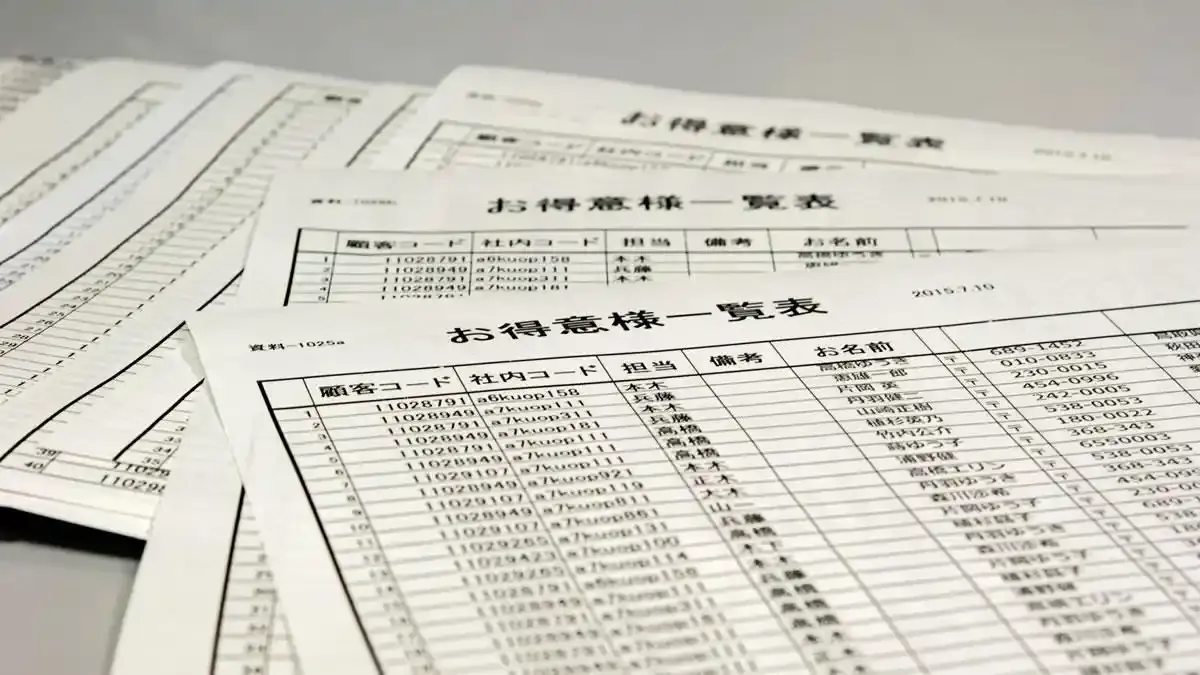
- It obtained the number from another company under a marketing data purchase agreement.
- The complainant had joined a marketing programme with the broker’s counterparty on 30 August 2010.
- It had not told the complainant that it collected his data from another source, because the data was obtained before the PDPA took effect.
Expert Committee Panel 1 reasoned in three steps.
- The broker collected and used the data without consent under Section 27, but the data pre-dated the Act, which Section 95 addresses.
- Even so, collecting data from another source must still comply with Section 25, paragraph one: notify the data subject without delay, no later than 30 days after collection, and obtain consent.
- Section 95 lets a controller keep using pre-existing data for its original purpose, but it must set up a way to withdraw consent and publicise it so data subjects can withdraw easily, with the right to request correction or erasure under Section 33. The broker did none of this.
The Committee found that the broker, as data controller, had not complied with the PDPA and, under Section 74 paragraph three (2), Section 83 and Section 90, ordered it to:
- Notify the data subject of the collection from another source without delay, within 30 days, and obtain consent, under Section 25.
- Delete the complainant’s personal data under Section 33.
- Stop the damage from the date of the order.
- Put measures in place so the same error does not recur.
- Set guidelines and comply with Sections 30, 35, 36, 37(3), 39 and 40, covering access rights, data accuracy, erasure after retention, records of processing (RoPA) and processor duties.
- Report back within 30 days of receiving the order.
(Decision No. 4/2566, dated 7 September 2023)
Author’s view: This case should be pinned on the wall of every marketing team, because it answers the two most common misconceptions.
First, “Data from before the PDPA is fair game.” Not quite. Section 95 allows continued use for the original purpose only, on condition that withdrawal is made easy. For disclosure and anything beyond collecting and using for the original purpose, Section 95 says the Act applies. Put simply, someone who joined Company A’s marketing programme in 2010 did not expect their number to be sold to an insurance broker 13 years later.
Second, “We bought the list legally under a proper contract, so we’re covered.” You are not. A contract between two companies does not replace the data subject’s consent. The buyer becomes a new data controller the moment it receives the list and must comply with Section 25 itself. Before you buy or accept a list from anyone, ask the seller whether the data subjects consented to onward transfer for this purpose. See the questions to ask in Vendor checks before signing, and if you do share data with another controller, document the purpose and the duty to notify in a Lead Generation Services Agreement or a controller-to-controller data sharing agreement.
Note also that order 5 did not stop at the one complainant. The Committee ordered organisation-wide fixes, from records of processing to processor duties. One complaint, the whole company fixed.
Using customer lists for targeting is not limited to phone calls. TechLawNow’s report (in Thai) on ChatGPT Ads targeting users by phone number and email, and the legal basis brands need to upload customer lists shows that “where did this list come from, and what may we use it for” follows you into every channel.
Case 2: A company admitted it collected the number “by mistake” and had already deleted it. Why was it still ordered to act?
Because deleting after a complaint does not undo what already happened. The Committee found that calling the customer was collection and use of data requiring consent under Section 27. Since the company itself admitted collecting the number by mistake, it found non-compliance and ordered full deletion and an immediate stop to all contact.
The complainant was a man who received both calls and SMS messages offering insurance from a company, without ever consenting. He asked the company to tell him the source of his data and to stop contacting him on every channel. It did nothing, so he complained.
In a letter dated 7 June 2023 the company explained that:
- It did contact the complainant, having collected his phone number “by mistake”.
- Once it learned what he wanted, it deleted the data and blocked contact with him.

Expert Committee Panel 1 found that calling the complainant was collection and use of personal data requiring consent under Section 27, and the company had admitted collecting the data by mistake. It therefore found that the company had not complied with the PDPA and, under Section 74 paragraph three (2) with Section 90, ordered it to:
- Delete all of the complainant’s personal data.
- Stop contacting the complainant on every channel immediately.
- Stop the damage from the date of the order.
- Put measures in place against the same error.
- Report back within 30 days.
(Decision No. 5/2566, dated 7 September 2023)
Author’s view: The lesson sits in the gap between “deleted” and “in the clear”.
The company fixed the problem before the Committee ruled, and the Committee still issued orders, because what it examined was conduct that had already happened: calls and SMS with no legal basis. The word “mistake” in the company’s own letter confirmed it never had a lawful reason to use the number.
The complainant also asked for two things from the start: tell me the source and stop contacting me. He got no answer until he complained. Had the company replied quickly, this might never have reached the Committee. The right to ask how data was obtained without consent is in Section 30, and the controller must act within 30 days of the request. See how to answer on time in Answering data subject requests within 30 days.
For businesses using outsourced call centres or lead generators, “mistakes” usually happen when lists arrive from vendors. Write the source of each list and the duty to delete on objection into the contract.
Case 3: She bought insurance through a comparison website and opted out. Why did someone still call?
Because her request never reached the person dialling. Here the company later stopped calling, the complainant withdrew, and the Committee closed the case. But the gap between “I opted out” and “they actually stopped” is exactly when customers get annoyed enough to complain.
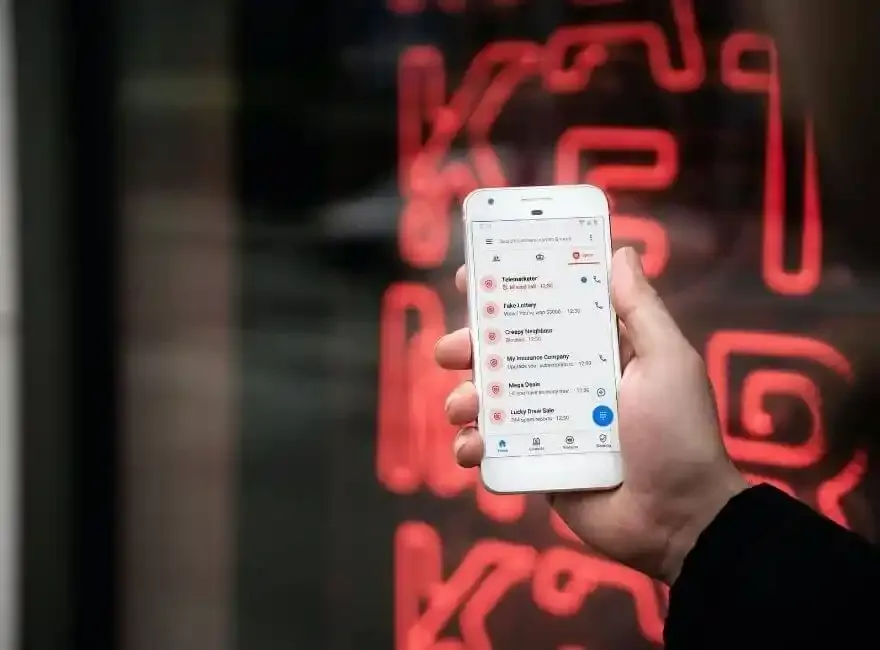
The complainant was a woman who bought insurance through a broker’s comparison website and made it clear she did not want to be contacted with offers on any day, including Sundays and public holidays.
Yet the broker’s staff still called her with offers, causing her nuisance, so she complained.
Later, she asked to withdraw the complaint because the broker had stopped contacting her. Expert Committee Panel 1 found there was nothing left to decide under clause 13(6) of the PDPC Regulation on the filing, non-acceptance, termination, consideration and time frames of complaints B.E. 2565 (2022), and closed the case (Decision No. 11/2567, dated 5 July 2024).
Author’s view: The case was closed, but that does not mean the company got it right. It means the customer was satisfied once the calls stopped and did not want to go further.
Legally, “don’t contact me again” carries weight in two ways. First, it is a withdrawal of consent under Section 19, which must be as easy as giving it. Second, it is an objection to direct marketing under Section 32, after which the controller must separate that data from marketing at once. There is no business-necessity exception to argue.
The real problem in cases like this is almost never legal. It is systems. The customer unsubscribes on the website, but the outbound team dials from a list exported last week, or from a second dialler that is not connected. Read how fast you must stop in Consent withdrawal in Thailand: how fast, how easy, and see a real fine abroad in TechLawNow’s report (in Thai) on Italy fining BBVA EUR 5.5 million because its systems kept sending ads for 7 months after customers opted out.
What this customer did right was say clearly when she did not want to be contacted and do it through the company’s own website, so there was a record of when the request was made.
Case 4: Renewal calls for car insurance on a car you don’t own, and they keep calling after you ask for deletion. Who is at fault?
The company must delete or correct inaccurate data when the data subject asks. Here the Committee found the company had complied and closed the case, but directed that whenever it acts on a request, it must tell the requester immediately. A customer who does not know the matter is resolved will come back and complain again.
The complainant was a woman whose story ran for almost a year.
- A company’s staff called about renewing a motor insurance policy. She said she was not the owner of the car and asked them to delete her number.
- On 7 January 2023, after asking for deletion, she still received a renewal message, so she called customer service to cancel her number again.
- On 12 January 2023 she received an email saying her data would be removed from the system.
- On 1 December 2023 the company’s staff called about renewing the car insurance again.
She suffered nuisance and lost confidence in the security of her personal data.

Expert Committee Panel 1 found that the company, as data controller under Section 6, had complied with the complainant’s request, and closed the case under clause 13(6) of the 2022 Regulation. But to prevent similar complaints, it directed that once the company acts on a request from a complainant or customer, it must notify them immediately (Decision No. 12/2567, dated 5 July 2024).
Author’s view: The decision does not say why the 1 December 2023 call still happened after the email confirmation. But the pattern is common in businesses that run annual renewal campaigns: a new round of contacts is pulled in from the same sources, such as last year’s policy data, agent data or dealer data, and deleted numbers come back. Without a suppression list checked on every import, deleting once is not enough.
The case also touches another duty: data accuracy under Section 35. A number linked to a car whose owner is someone else is wrong from the start. The result is twofold: an unrelated person is bothered, and the real owner may never receive a renewal notice.
Vehicle data travels further than most people think. Research covered by TechLawNow (in Thai) found that 28 of 30 connected-car apps send data to advertising and analytics firms, so car data does not stay inside the policy file.
The Committee’s direction is simple and powerful: “Once you’ve done it, say so.” A customer who receives “We deleted your number on [date]” knows what to do if calls continue, and the company has evidence that it answered.
How does your number end up with an insurer? 5 common routes
The common routes are: you gave it to one programme or company and it was passed on; you filled in a price comparison form; the data is tied to an asset that changed hands; a lead-generation vendor collected it; or a data leak. The four cases here cover the first three.
| Route | Example | Matches case | Ask the company |
|---|---|---|---|
| Joined a marketing programme and the data was sold on | Lucky draws, loyalty points, giveaways | 1 | “Who gave you my number, and when?” |
| Filled in a quote form | Insurance or loan comparison sites | 3 | “Who did you share my data with?” |
| Data tied to a car or asset | Previous owner’s number, a booking contact | 4 | “Which car is this linked to, and how do I fix it?” |
| Collected by an outsourced lead vendor | External teams, independent agents | 2 (possibly) | “Who collected this number?” |
| Data leak | Databases sold in closed groups | Not in this article | Complain to the PDPC and report to police |
This table is the author’s view based on observed patterns. The key point is that you have the right to ask where a company obtained your data under Section 30 when it was obtained without your consent, and the answer tells you which tap to turn off.
For a sense of scale in Thailand, see TechLawNow’s coverage (in Thai) of PDPC statistics: 4,210 PDPA complaints, which reports that the financial sector filed the most breach notifications, 723 incidents.
Insurance sales calls won’t stop. What should you do? A 7-day plan
Keep evidence, ask for the source, object in writing, ask for confirmation, wait no more than 30 days, then complain to the PDPC if the calls continue. You can do every step yourself without a lawyer.
| Day | What to do | Why |
|---|---|---|
| 1 | Note the calling number, date, time and company name and screenshot any SMS | Basic evidence for every later step |
| 1 | Ask on the call “Where did you get my number?” and say “Stop contacting me on every channel” | Your first objection (cases 1 and 2) |
| 2 | Send a written request by email or the company’s web form: tell me the source, delete my data, and I object to direct marketing | A clear date that starts the 30-day clock (case 3) |
| 3 | Ask the company to confirm once it has acted | Matches the Committee’s direction in case 4 |
| 7 | Log any calls that still come in | Evidence that the request was not followed |
| Within 30 days | If calls continue, complain to the PDPC with all evidence | The route that produced the orders in cases 1 and 2 |
This sequence is the author’s view. If a caller asks for your credit card, ID card number or an OTP, hang up immediately, because it may not be an insurer at all but a scammer. See the warning signs in EP.07 on identity misuse.
What must a business with a telesales team do to comply with the PDPA? A 10-point checklist
If you can’t answer a point, fix it before the next call. All four cases trace back to three causes: lists of unknown origin, stop requests that never reach the caller, and deletion that does not stick. These 10 points apply to insurers, brokers, banks, car dealers and any business that calls customers.
- Know the source of every contact. Record where each number came from, when and on what legal basis (case 1).
- Don’t buy lists whose seller cannot prove consent, and if you receive a list from another source, notify the data subjects within 30 days under Section 25.
- Pre-2022 data is not a free pass. Use it only for the original purpose, with easy withdrawal under Section 95.
- Keep one central do-not-contact list that every team, every dialler and every vendor checks before calling (cases 3 and 4).
- Check the do-not-contact list on every import of new contacts, including annual renewal lists (case 4).
- Let agents accept “don’t call me again” on the call and log it immediately, without making the customer fill in a form.
- Answer source and deletion requests within 30 days with a reference number (cases 1 and 2).
- Tell the customer as soon as you have acted, as directed in case 4.
- Check the accuracy of numbers linked to policies or assets. If the person says they are not the owner, remove the number from that record under Section 35.
- Train every telesales agent and vendor on when they must stop and what to say when a customer asks where the number came from.
Point 10 is the one companies forget most, even though outbound agents are the voice the customer actually hears. If you want your team to build this skill, take a look at the upskilling courses at Skillno (coming soon). For points 1 to 3, if you are unsure which legal basis each kind of marketing needs, read Do you need consent to market to past customers?, and if you plan to rely on legitimate interests instead of consent, see Three questions before relying on legitimate interests. Or check your whole business quickly with our free 10-point PDPA health check.
What does a business risk by calling without a legal basis? 4 layers
The risks are Committee orders, administrative fines, civil damages, and a brand customers remember for the wrong reason. Two cases in this episode ended with orders to delete and rebuild processes, which is only the first layer.
| Layer | Risk | Detail |
|---|---|---|
| 1 | Expert Committee orders | Delete, stop contact, put measures in place and report within 30 days under Section 90 (cases 1 and 2) |
| 2 | Administrative fines | Collecting or using data without a basis under Section 24 or 27, collecting from another source in breach of Section 25, or failing to stop after an objection under Section 32 paragraph two: up to THB 3,000,000 under Section 83. Failing to give the Section 23 notice: up to THB 1,000,000 under Section 82 |
| 3 | Civil liability | Data subjects may claim compensation under Section 77, and courts may add punitive damages of up to twice the actual damages under Section 78 |
| 4 | Brand | A customer called after opting out remembers the insurer’s name, not the vendor that dialled |
Note that the order in case 1 cited Section 83, the fines provision, among its powers, although no fine was imposed. See all penalties in the PDPA penalties guide.
A new arc of “PDPA case files”: your data in the hands of banks and insurers
The next six episodes (EP.08 to EP.13) cover real complaints against banks, insurers and financial institutions, all summarised from decisions of Expert Committee Panel 1.
| Episode | Topic | Key question |
|---|---|---|
| EP.08 | Insurance telesales that won’t stop | Where did they get my number, and must they stop? |
| EP.09 | Bank marketing and consent | When is consent in a banking app not free? |
| EP.10 | Erasure requests refused | Which laws require a bank to keep data? |
| EP.11 | Debt and loans | How far can a lender chase through third parties? |
| EP.12 | Who looked at my account? | The right to see access logs |
| EP.13 | Insurance claims and the limits of the PDPA | What the PDPA can and cannot fix |
For the basics of consent before the next episode, see the guide to valid consent under Section 19.
Let Kooru set up your list sourcing and stop-calling process, before the next customer complains
Kooru reviews where your lists come from, your contracts with sellers and vendors, how you take stop requests and how you confirm back to customers, so it is all ready before your telesales team makes the next call. All four cases ask the same question: “Where did you get my number, and why haven’t you stopped?”
1. A whole-business gap review in 3 working days
Start with Kooru Data Shield, Assessment package, THB 5,900. Our legal team reviews your list sources, the legal basis of each campaign and your documents, then delivers a report and fix plan within 3 working days.
2. Contracts for buying, sharing or generating lists
Use the DSA and DPA agreements package for lists received from partners, agents and lead vendors, so every contact has a documented source and a clear duty to notify.
3. Consent withdrawal and rights requests
Use the consent withdrawal notice with the enterprise consent management procedure and the data subject rights form set, so “don’t call me again” is recorded, acted on and confirmed every time.
4. Monthly DPO service
If your business runs telesales, agents or annual renewal campaigns, see Kooru’s DPO as a Service.
Contact us
Message us on LINE @kooru and tell us briefly where your team’s call lists come from. Kooru’s legal team replies during business hours, and the first 15-minute consultation is free.
Thoughts to leave you with
Your phone number may travel further than you think, and take 13 years to get there.
A purchase agreement between two companies does not speak for the person who owns the number.
The word “mistake” in a reply letter does not undo a call already made.
Deleting once means nothing if next year’s list pulls the same number back in.
And the question every sales team should be able to answer is not “how many calls can we make a day?” but “if a customer asks where we got their number, how many seconds does it take us to answer?”
Frequently asked questions (FAQ) on insurance telesales and the Thai PDPA
1. Is it a PDPA breach when an insurer calls to sell and I never gave them my number?
It can be, if the company has no legal basis or obtained the number from another source without notice and consent. In Decision No. 4/2566, a broker that bought a list from another company was found non-compliant and ordered to disclose the source, delete the data and fix its systems within 30 days.
2. Can a company buy a customer list from another company?
It can, but using it lawfully is hard. Collecting data from another source must comply with Section 25: notify the data subjects within 30 days and obtain consent, unless an exemption applies. A purchase agreement between companies does not replace the data subjects’ consent.
3. Can data collected before the PDPA took effect still be used for sales calls?
Only for the original purpose under Section 95, and the controller must offer an easy way to withdraw consent and publicise it. In Decision No. 4/2566, the broker argued the data pre-dated the Act but had not met these conditions, so it was still found non-compliant.
4. If a company deletes my number after I complain, can it still be ordered to act?
Yes. In Decision No. 5/2566, the company admitted collecting the number by mistake and had deleted it, but the Committee still found non-compliance, because calling is a use of data that needs consent under Section 27, and ordered full deletion and an immediate stop to all contact.
5. Once I tell them to stop calling, when must they stop?
They must stop using the data for direct marketing when you object under Section 32, and stop any consent-based use when you withdraw consent under Section 19. In practice they should stop at once on every channel, including vendors who call on their behalf.
6. Can I ask a company where it got my number?
Yes. Section 30 lets you ask a controller to disclose how it obtained data you did not consent to, and it must act within 30 days of the request. The complainants in Decisions No. 4/2566 and 5/2566 asked for this before complaining.
7. What should I do about renewal calls for a car I don’t own?
Tell the company you are not the owner and ask it to remove your number from that car’s record, ask for written confirmation, and keep evidence if calls continue. In Decision No. 12/2567, the Committee directed the company to notify the complainant immediately once it acted on a request.
8. Can I withdraw my complaint if the calls stop?
Yes. In Decision No. 11/2567, the complainant withdrew because the company had stopped calling, and the Committee closed the case under clause 13(6) of the 2022 Regulation. Closing a case this way does not mean the company acted correctly, only that nothing remained to decide.
9. What should I prepare to complain to the PDPC about insurance sales calls?
The calling numbers, dates and times, the company name, SMS screenshots, proof that you asked them to stop or delete your data, and any reply from the company. Dated evidence helps the Committee see that the company received your request and did not act on it.
10. Where should a business with a telesales team start?
Know the source of every contact, keep a central do-not-contact list checked on every import, let agents accept stop requests on the call, answer requests within 30 days, and confirm back to the customer as soon as you have acted.
References
- Expert Committee Panel 1, Office of the Personal Data Protection Committee. (7 Sep 2023). Decision No. 4/2566: respondent ordered to comply strictly with the PDPA (broker obtained a list under a marketing data purchase agreement).
- Expert Committee Panel 1. (7 Sep 2023). Decision No. 5/2566: respondent ordered to delete all of the complainant’s personal data and stop contacting the complainant on every channel.
- Expert Committee Panel 1. (5 Jul 2024). Decision No. 11/2567: use of personal data not in line with its purpose (comparison website).
- Expert Committee Panel 1. (5 Jul 2024). Decision No. 12/2567: use of personal data without consent (motor insurance renewal calls).
- Personal Data Protection Act B.E. 2562 (2019), Sections 6, 19, 23, 24, 25, 27, 30, 32, 33, 35, 36, 37, 39, 40, 74, 77, 78, 82, 83, 90 and 95.
- PDPC Regulation on the filing, non-acceptance, termination, consideration and time frames of complaints B.E. 2565 (2022), clauses 13(6) and 16, as cited in the decisions.
- AiPDPA. Articles and guides on consent, withdrawal, data subject requests and legitimate interests, https://aipdpa.com/en.
- TechLawNow. Technology law news (Thai) on the BBVA opt-out fine, ad targeting from customer lists and connected-car data sharing, https://techlawnow.com.
This article is general information for business decisions, not legal advice for a specific case. The stories summarise published complaint decisions. Sections marked as the author’s view or commentary are additional analysis, not part of the decisions. We do not name people or organisations, to keep the focus on the principles.
By: Khun Phuwara, Senior Advisor in Business Strategy and Legal-Tech at Kooru
Frequently asked questions
Is it a PDPA breach when an insurer calls to sell and I never gave them my number?
It can be, if the company has no legal basis or obtained the number from another source without notice and consent. In Decision No. 4/2566, a broker that bought a list from another company was found non-compliant and ordered to disclose the source, delete the data and fix its systems within 30 days.
If a company deletes my number after I complain, can it still be ordered to act?
Yes. In Decision No. 5/2566, the company admitted collecting the number by mistake and had deleted it, but the Committee still found non-compliance, because calling is a use of data that needs consent under Section 27, and ordered full deletion and an immediate stop to all contact.
Once I tell them to stop calling, when must they stop?
They must stop using the data for direct marketing when you object under Section 32, and stop any consent-based use when you withdraw consent under Section 19. In practice they should stop at once on every channel, including vendors who call on their behalf.

About the author: Phuwara Krobtaku
Licensed lawyer no. 477/2558 · Thai Barrister-at-Law · LL.M. Intellectual Property & Information Law (gold medal) · DPOMore than 20 years in IT and digital marketing before law. Founder of Kooru, a tech-law advisory handling PDPA, AI governance and intellectual property for SMEs.