

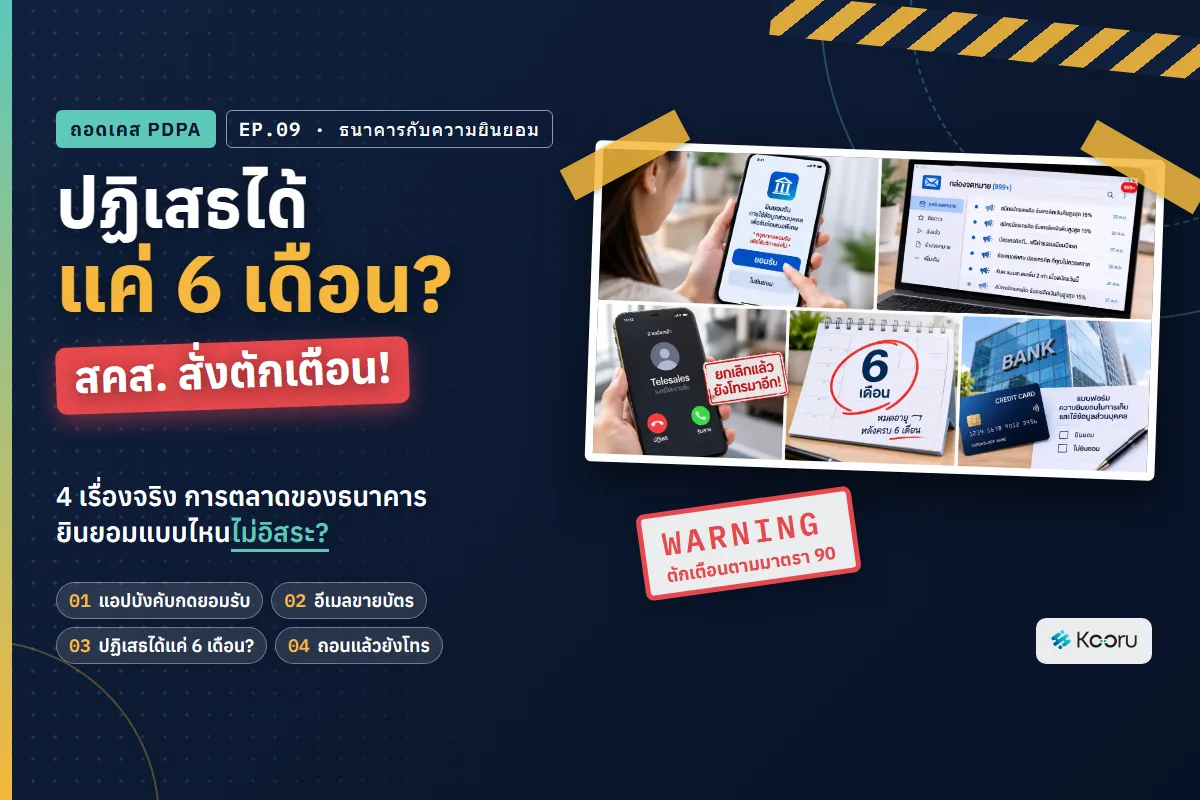
Introduction: “Your refusal is valid for six months.” The sentence that earned a bank a warning
A woman received a call from a bank offering a deposit product, although she had never given consent. She objected, and the bank officer answered with a sentence many Thai customers will recognise.
“The refusal you gave is valid for six months from the date you told us, and only for the branch that recorded it. After six months, staff can use the data again.”
She then rang the complaints number the bank had published, but it could not be used to make a complaint. So she complained to the Expert Committee.
The result: the Committee found that the bank had used her data without consent and without any other lawful basis, in breach of Section 27, and issued a formal warning under Section 90. The bank was told to fix the way it checks consent before marketing calls and to report back within 30 days.
The other three cases in this episode are also about banks and marketing.
- A customer complained that a mobile banking app asked for consent in a way that was not freely given. The bank changed the consent screen until he was satisfied.
- A credit card applicant received marketing emails that the bank sent on the basis of legitimate interests. He opted out, and the bank removed him within three days.
- Another customer withdrew consent and got a confirmation message, yet staff kept calling him about a credit card. The Committee found a breach and ordered staff training and a faster withdrawal process.
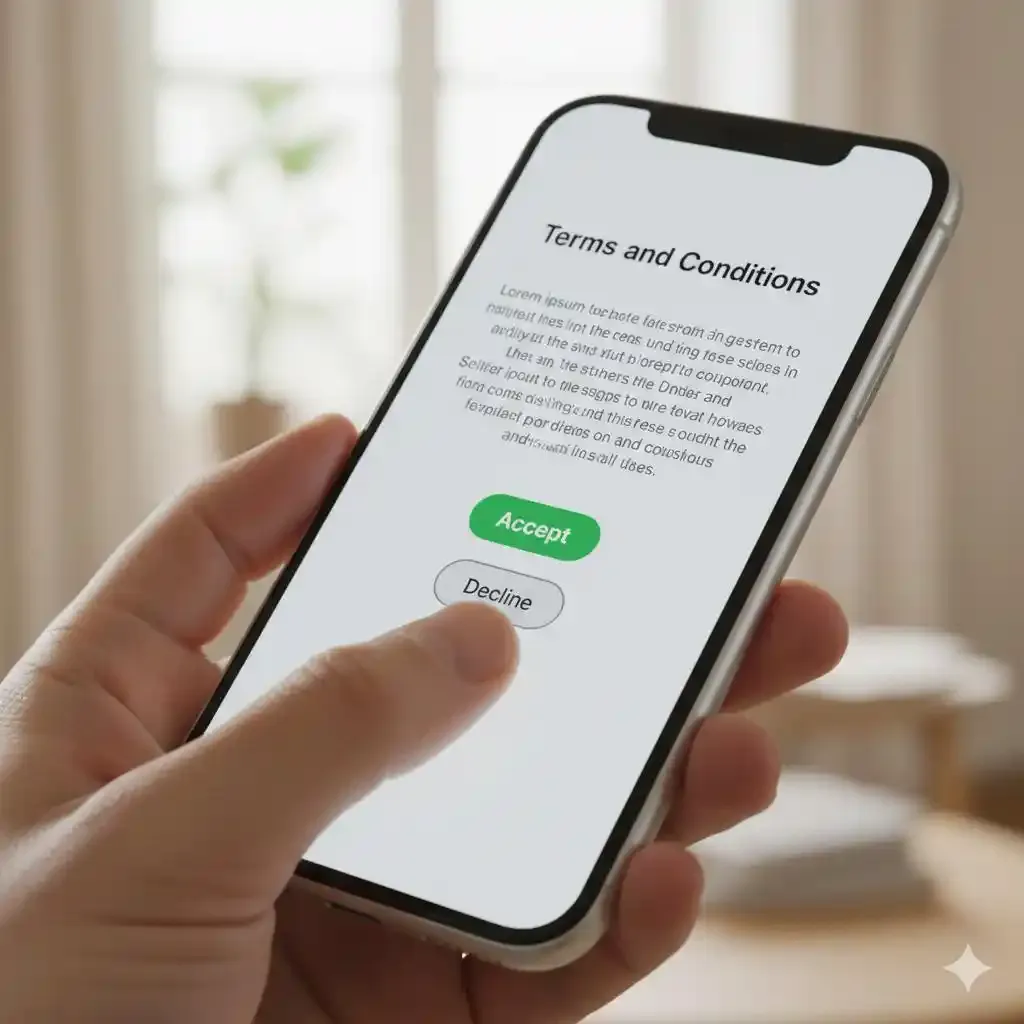
Have you ever tapped “Accept” in a banking app without reading it? And if you run a business that markets to customers, the question to ask yourself is this: when a customer says “no more”, how long does your system remember it, and does every salesperson know they must stop?
This is EP.09 of the “PDPA Case Files” series and the second episode of the arc “Our data in the hands of banks and insurers”. The previous episode is EP.08 insurance telesales that would not stop, and the episode that laid the groundwork on consent is EP.06 pre-ticked consent and the right to erasure.
Does a bank need my consent before it calls or emails me with offers?
Not always consent, but always a lawful basis. A bank may rely on consent under Section 19 or on legitimate interests under Section 24(5). If it has no basis at all, or keeps contacting you after you withdraw consent or object, it breaches Section 27. In two of the four cases below, the Committee found a breach of Section 27.
Your name, phone number and email are personal data. Calling or emailing you with offers is a “use” of personal data for direct marketing. Five rules matter most here.
| Section | Rule | How it applies to bank marketing |
|---|---|---|
| 19, para. 4 | Consent must be requested with the utmost regard for the data subject’s freedom, and must not be made a condition of a service where it is not necessary or related | Consent screens in banking apps |
| 19, para. 5 | Consent can be withdrawn at any time, as easily as it was given | “Don’t contact me again” has no expiry date |
| 24(5) | Data may be used without consent where necessary for legitimate interests that are not overridden by the data subject’s rights | Marketing emails to card applicants |
| 27 | No use or disclosure without consent, unless an exception in Section 24 or 26 applies | Every sales call |
| 32 | The data subject may object to direct marketing at any time | Unsubscribing or telling the caller to stop |
The four cases at a glance, in order of decision number, with what the Committee decided
| Case | What happened | Outcome |
|---|---|---|
| 1 | A mobile banking app asked for consent in a way that was not free; the customer asked for a fix and withdrew consent | The bank fixed the screen; the complainant withdrew; complaint not accepted (1/2566) |
| 2 | A card applicant received marketing emails sent under Section 24(5) | The bank removed him within 3 days of his objection; complaint withdrawn and closed (3/2567) |
| 3 | A deposit product call without consent; the officer said a refusal lasts 6 months | Breach of Section 27; formal warning under Section 90 and an order to fix the process (6/2567) |
| 4 | Consent withdrawn and confirmed, yet credit card calls continued | Breach of Section 27; orders for staff training and faster withdrawal, despite a settlement (8/2567) |
Before you read on: The stories in this article summarise published decisions of the Expert Committee, Panel 1, of the Office of the Personal Data Protection Committee (PDPC). Every decision redacts the names of the complainant and the bank, so we do not know which bank it was, and the four cases are not necessarily the same bank. We tell only the facts in the documents and add nothing they do not say. Commentary and recommendations are the author’s view.
Case 1: A banking app made you tap “Accept” with no real choice. Is that a PDPA breach?
It risks breaching Section 19, paragraph 4, which requires a bank to have the utmost regard for the customer’s freedom when asking for consent. Here the bank changed its consent screen until the complainant was satisfied, he withdrew his complaint, and the Committee did not accept the case. There was no ruling on the merits, but the case shows that one complaint can make a bank change its app.
The complainant, a man, said that
- the bank, as provider of a mobile banking app, asked for consent in a way that did not give him freedom to choose;
- this, in his view, did not comply with Section 19, paragraph 4 of the PDPA;
- he wanted two things: for the bank to fix the app so it asks for consent lawfully, and to withdraw the consent he had given the bank and its related group companies.
He later asked to withdraw his complaint, saying the bank had changed how the app asks for consent so that it complied with the law and met what he wanted.
The Committee found that the complainant wished to withdraw and the bank had done what he asked. Relying on Section 74, paragraph 1, and clause 13(6) of the PDPC regulation on complaints, it issued an order not accepting the complaint (Decision No. 1/2566, 7 April 2023).
Author’s view: The decision does not describe what the original screen looked like, so we will not guess. In practice, consent that is “not free” usually looks familiar:
- You must accept marketing before you can enter the app, although transfers and balance checks need no marketing consent at all.
- Several things are bundled into one button: accepting the terms of service, accepting marketing and allowing data to go to group companies, all in one tap.
- “Accept” is prominent and “Decline” is hidden, or several screens away.
Section 19, paragraph 4 says consent must not be made a condition of a contract or service where it is not necessary for, or related to, that contract or service. So a bank’s test is simple: if a customer declines marketing, can they still transfer money? If not, the screen has a problem.
Note too that the complainant withdrew consent for the bank’s related group companies as well. Consent that flows on to group companies is where customers are starting to push back, so banking groups that share data need a withdrawal that stops across the whole group, not just at the company where the customer tapped “withdraw”.
Apps that “ask but don’t listen” are not only a Thai problem. CNIL fined Fnac EUR 7 million because its app kept sending data to a recommendation engine after users declined, which shows regulators now test whether the “decline” button actually works, and Europe is also cracking down on dark patterns, see the EU action against 9 games over dark patterns (both TechLawNow, in Thai). If you are designing a consent screen, start with the guide to valid consent under Section 19.
Case 2: You applied for a credit card and got marketing emails. Can a bank rely on “legitimate interests”?
In this case the bank relied on legitimate interests under Section 24(5) to send marketing emails to a card applicant who had not said he did not want to be contacted, and when he objected, it removed him within three days. He withdrew his complaint and the Committee closed it. The Committee did not rule on whether the basis was valid, but this is an example of a bank that responded quickly.
The complainant, a man, felt his data had been misused because he received marketing emails from the bank without having given consent.
The timeline in the decision:
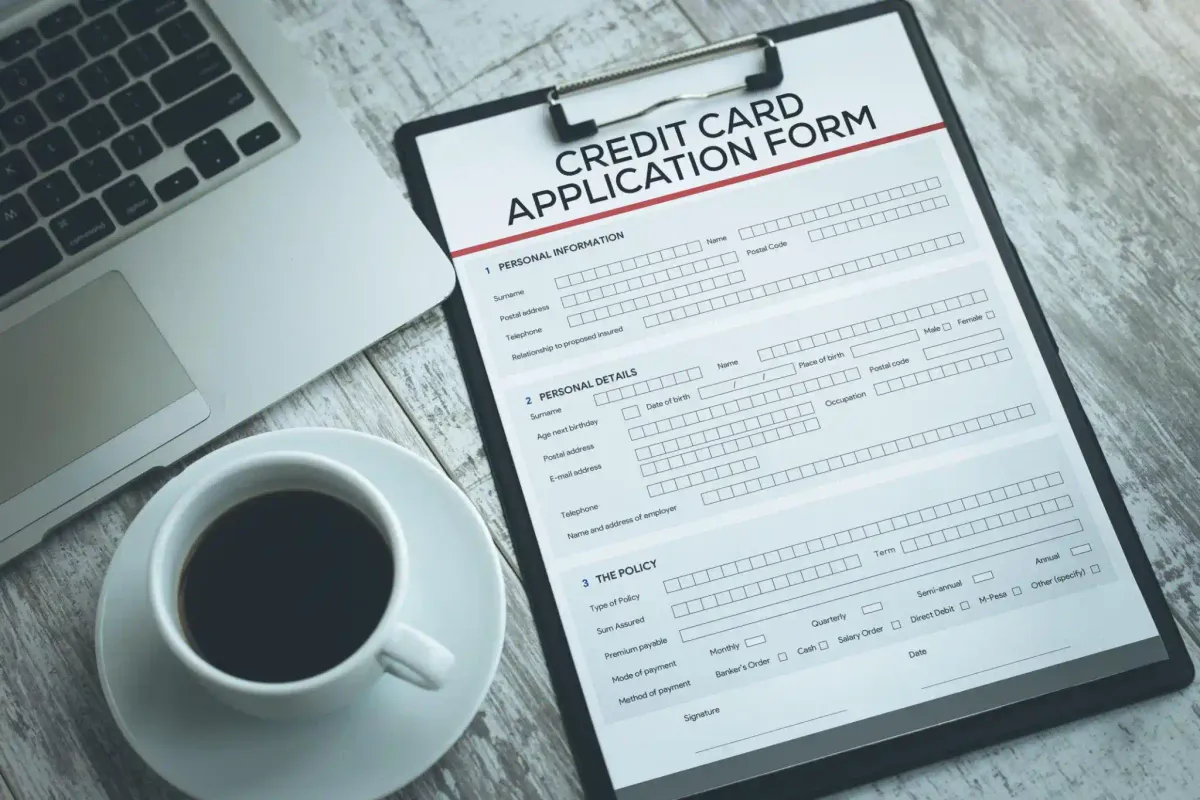
- 22 May 2022: he applied for a credit card with a financial institution, and on the day he submitted the application he did not indicate that he did not want marketing contact.
- The bank therefore sent him marketing on the basis of legitimate interests under Section 24(5).
- 6 August 2022: he cancelled marketing communications with the bank and, at the same time, filed a complaint with the PDPC.
- 9 August 2022: the bank removed his name from direct marketing contact.
- 18 August 2022: the bank told him it had complied with his request.
- He later asked to withdraw his complaint.
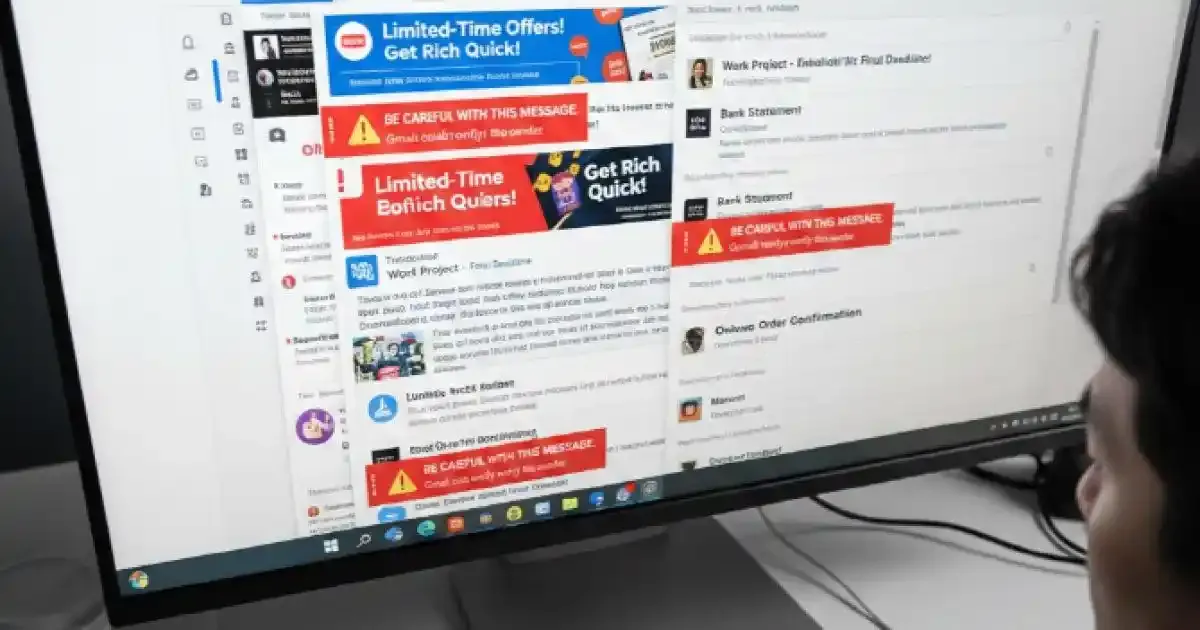
The Committee found the case fell under clause 13(6) of the PDPC Regulation on the filing, non-acceptance, termination, consideration and time frames of complaints B.E. 2565 (2022), and, relying on Section 74, paragraph 2, and clause 13(3) of the same regulation, ordered the complaint terminated (Decision No. 3/2567, 11 March 2024).
Author’s view: From the bank’s side, this is the best case in the episode, with three lessons.
First, marketing does not always need consent. This bank chose legitimate interests, a basis the law allows, but only where the business interest is not overridden by the customer’s rights. Before relying on it, answer the three legitimate interest questions, and check which basis fits which kind of marketing in you don’t need consent for everything.
Second, legitimate interests come with a right to object. Under Section 32 a customer can object to direct marketing, and the bank must then take that data out of marketing. This bank did it in 3 days and confirmed in 12. Compare that with Cases 3 and 4, where customers said no and were still contacted: the difference is not the legal basis, it is whether the system can actually stop.
Third, the application form is the best place to ask. The decision says the complainant did not opt out on the day he applied, which means the form offered the choice. Asking at the start gives the bank evidence that the customer knew and could refuse. If you send offers to past customers, read do you need consent every time you market to existing customers?
If you use an outside agency to send marketing email, put the duty to remove objectors, and the deadline, in the contract; see what an Email Marketing Services Agreement should include. And if you email customers in Europe, watch tracking pixels, see Italy requires consent before email open-tracking pixels (TechLawNow, in Thai).
Case 3: A bank officer said “your opt-out only lasts six months”. Is that true?
No. Nothing in the PDPA makes a refusal or a withdrawal of consent expire after six months. Here the Committee found that the bank had used the data without consent and without any other lawful basis, in breach of Section 27, and issued a formal warning under Section 90. It is the only case in this episode that ended in a warning.
The complainant, a woman, set out this sequence:
- 6 July 2023: the bank contacted her to offer a deposit product, although she had not given consent.
- She objected and was told by a bank officer that her refusal was valid for six months from the date she gave it, and that it applied only within the branch that recorded it. After six months, staff could use the data again.
- She called the number the bank had published for complaints, but it could not be used to make a complaint.
- She felt the bank was collecting, using or disclosing her data unlawfully and offered no way to complain, so she went to the Expert Committee.

The Committee found that the bank used personal data without the data subject’s consent and without any other lawful basis for collecting, using or disclosing it, which was a breach of Section 27.
Because it was a first occurrence and the bank had already done what the complainant wanted, the Committee relied on Section 90 to issue a warning and an order to correct the bank’s operations:
- Put appropriate measures in place, improving the processes or technology used for direct marketing so they are effective and appropriate.
- At a minimum, have a process to check consent or the lawful basis for direct marketing before contacting anyone with an offer.
- Give notice of purposes and details under Section 23.
- Report compliance within 30 days of receiving the order.
(Expert Committee Panel 1, Decision No. 6/2567, 11 March 2024)
Author’s view: “Your refusal only lasts six months” is wrong on two levels.
First, time. Section 19, paragraph 5 lets a data subject withdraw consent at any time, and Section 32 lets them object to direct marketing. No section says a refusal expires. The six months may come from an internal policy or a system that puts names back into campaigns automatically. If so, that is the system to fix, not something customers must accept.
Second, place. “Only for the branch that recorded it” reflects a set-up where each branch holds its own list. But the data controller in law is the bank as a whole, not the branch. A customer says it once; the whole bank must stop.
Do not overlook the complaints line that did not work. The Committee did not rule on it separately, but for customers a channel that cannot be reached is what turns a small issue into a formal complaint. If the officer could have logged the refusal on the spot, this may never have reached the Committee. See how to design request channels in how fast you must stop after consent is withdrawn.
Finally, order 2 is the heart of this episode: “check consent or the lawful basis before you call.” It sounds obvious, but it means every salesperson must see the customer’s consent status before they dial. If your system has no such screen, start there. For a real fine when a system forgot an opt-out, see Italy fined BBVA EUR 5.5 million for marketing sent for 7 months after an opt-out (TechLawNow, in Thai).
Case 4: You withdrew consent and the bank confirmed it. Why are they still calling about a credit card?
Because the withdrawal never reached the people making the calls. The Committee held that once consent is withdrawn, the bank no longer has authority to use the data under Section 19, so further calls breach Section 27, and even though the parties had settled, it still ordered staff training and a faster withdrawal process. A settlement does not make the orders go away.
The complainant, a man, set out this sequence:
- The bank contacted him to invite him to apply for a credit card, although he said he had never consented to being contacted with any product.
- He withdrew his consent, and the bank sent a message back confirming the withdrawal.
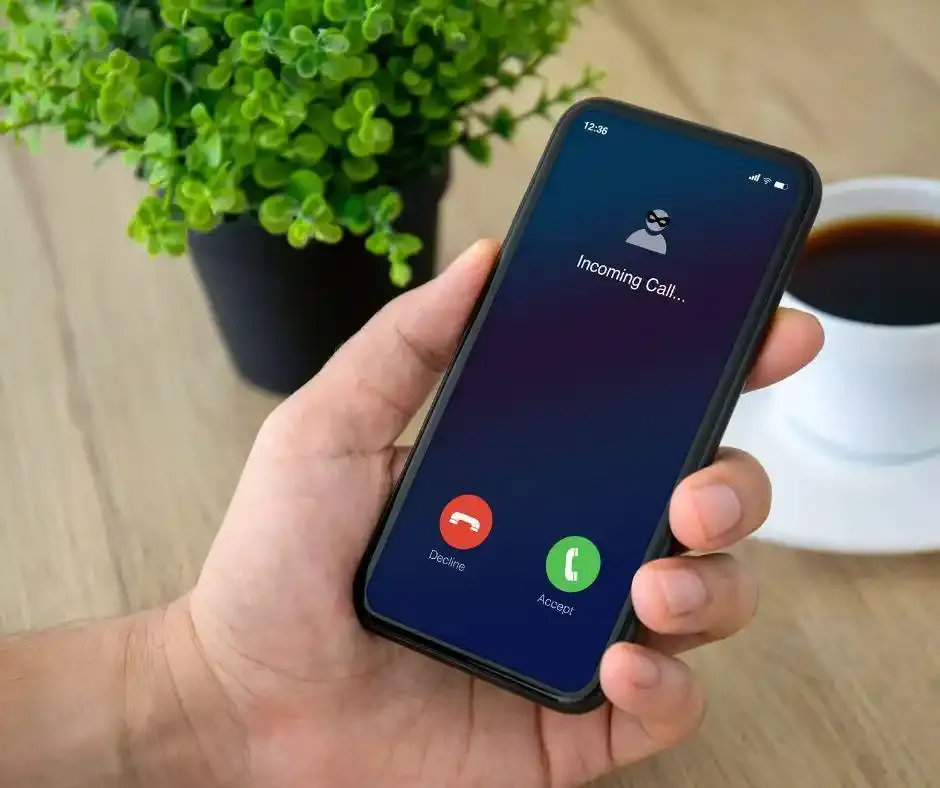
- After that, bank staff still called him to sell products as before.
The Committee reasoned as follows:
- The bank is a data controller under Section 6.
- The complainant had withdrawn consent, so the bank no longer had legal authority to collect, use or disclose his data under Section 19.
- Yet the bank kept contacting him to sell products, which was a failure to comply with Section 27.
- Later, the bank and the complainant reached a settlement.
Relying on Section 74, clause 16 of the PDPC Regulation on complaints B.E. 2565 (2022) and clause 4(7) of the PDPC Notification on security measures for data controllers B.E. 2565 (2022), the Committee ordered the bank to:
- Build awareness of the importance of personal data protection and security among personnel, employees and officers who access, collect, use or disclose personal data, so that they know and follow Section 37(1).
- Improve how it handles requests to exercise data subject rights, in line with the law and the data subject’s reasonable expectations, especially the time it takes for a withdrawal of consent to take effect, so that withdrawal is faster and more effective.
- Report back within 30 days of receiving the order.
(Expert Committee Panel 1, Decision No. 8/2567, 11 March 2024)
Author’s view: This is the most interesting case from a systems point of view, because the bank got it half right. It took the withdrawal and sent a confirmation, but the confirmation did not change the list in the salesperson’s hands.
This pattern is common in large organisations. Requests land in one system, outbound sales run on another, and campaign lists are pulled a week in advance. A customer withdraws on Monday; the list the caller holds is still last Friday’s.
Note that the Committee tied this to Section 37(1) and the security measures notification, which we usually associate with passwords and firewalls. Here the “measures” are people who know when to stop and a system that makes withdrawal take effect quickly.
The other lesson: a settlement does not end it. The parties settled, but the Committee still ordered a system-wide fix, because the problem is not one customer. If the system is not fixed, the next customer will have the same experience.
To see how fast you must stop and how to handle requests in time, read answering access, erasure and stop requests within the deadline and the guide to data subject requests.
Consent, objection, withdrawal: which word should a bank customer use?
If the bank relies on consent, “withdraw consent” under Section 19. If it relies on legitimate interests, “object to direct marketing” under Section 32. If you are not sure, do both in one request. In practice the result is the same: the bank must stop using your data for marketing.
| What you do | When to use it | Section | Example in this episode |
|---|---|---|---|
| Decline consent at the start | The bank asks for consent in an app or application form | 19 | Cases 1 and 2 |
| Withdraw consent | You gave consent before and no longer want it | 19, para. 5 | Cases 1 and 4 |
| Object to direct marketing | The bank relies on legitimate interests, or you don’t know its basis | 32 | Case 2 |
| Ask for erasure | You don’t want the bank to keep the data at all (other laws may require retention) | 33 | Coming in EP.10 |
This table is the author’s view, to make the choice easy. The key point: none of these expires, and a bank has no right to limit your request to one branch or one channel.
Bank marketing that won’t stop: what should you do? A 7-day plan
Keep evidence, withdraw and object in writing, ask for confirmation, log any further contact, then complain to the PDPC if it continues. You can do every step yourself; you don’t need a lawyer.
| Day | What to do | Why |
|---|---|---|
| 1 | Note the date, time, caller’s number, officer’s name, branch and product offered, and screenshot any email or SMS | Basic evidence for every later step |
| 1 | Say on the call: “I withdraw my consent and object to marketing on every channel.” If the officer says it only lasts six months or only for one branch, write that down | Evidence like Case 3 |
| 2 | Send a written request via the app, email or the bank’s form, stating that you withdraw consent, object to direct marketing under Section 32, and want it to apply to the bank and its group companies | A clear date (Cases 1 and 2) |
| 3 | Ask the bank to confirm in writing | Something to compare against if calls continue (Case 4) |
| 7 | Log any calls or emails that still arrive, with dates | Evidence that the request was not followed |
| Within 30 days | If it hasn’t stopped, complain to the PDPC with all your evidence | The route that led to the orders in Cases 3 and 4 |
This sequence is the author’s view. And if a caller claiming to be your bank asks for an OTP, your card number or for you to click a link, hang up. Real banks do not ask for these by phone. See how to spot impersonators in EP.07 identity misuse.
What must banks and businesses that market to customers do to comply? A 10-point checklist
If you can’t answer a point, fix it before the next campaign. All four cases trace back to three things: consent screens with no real choice, refusals the system forgets, and salespeople who can’t see consent status before they call. These ten points apply to banks, insurers, lenders, retailers and any business with a customer base.
- Separate marketing consent from the terms of service. A customer who declines marketing must still be able to use the core service (Case 1).
- Make “accept” and “decline” equally visible. No hiding, no pre-ticked boxes.
- Separate consent for group companies, and allow withdrawal across the whole group in one request (Case 1).
- Record the legal basis of every campaign. If you rely on legitimate interests, document the assessment (Case 2).
- Ask about marketing on the application form and keep the answer as evidence (Case 2).
- A refusal never expires. Remove any internal rule that puts names back into campaigns automatically (Case 3).
- The do-not-contact list belongs to the whole organisation, not a branch or a team (Case 3).
- Show salespeople the customer’s consent status before every call, as ordered in Case 3.
- A withdrawal must take effect on the lists salespeople already hold, immediately, not at the next list pull (Case 4).
- Train every salesperson under Section 37(1) to know when to stop, and never to tell a customer that a refusal has a time limit (Cases 3 and 4).
Point 10 was a direct order in Case 4. If you want your sales team to build this skill, look at the workplace courses at Skillno (coming soon), or get a quick read on your whole business with the free 10-point PDPA health check.
Marketing without a lawful basis: what are the risks? Four layers
The risks are a Committee warning or order, administrative fines, civil damages and lost customer trust. Two cases in this episode ended in a warning and orders to fix the system, which is only the first layer.
| Layer | Risk | Detail |
|---|---|---|
| 1 | Expert Committee orders | Warnings, orders to improve processes and train staff, and a report within 30 days (Cases 3 and 4) |
| 2 | Administrative fines | Using data without a basis under Section 24 or 27, or failing to stop after an objection under Section 32: up to THB 3,000,000 under Section 83. Failing to give notice of purposes and details under Section 23: up to THB 1,000,000 under Section 82 |
| 3 | Civil liability | Data subjects can claim compensation under Section 77, and courts can add punitive damages of up to twice the actual damages under Section 78 |
| 4 | Customer trust | Bank customers can move their accounts in a day, and someone told “your refusal only lasts six months” will tell others |
The warning in Case 3 says plainly that it was given because this was a first occurrence and the bank had already fixed it. A repeat may not be treated as leniently. For the full penalty picture, see the guide to PDPA penalties.
The “PDPA Case Files” series: our data in the hands of banks and insurers
This arc has six episodes (EP.08 to EP.13) on real complaints against banks, insurers and financial institutions. Every story is drawn from decisions of the Expert Committee, Panel 1.
| Episode | Topic | Key question |
|---|---|---|
| EP.08 | Insurance telesales that won’t stop | Where did they get my number, and must they stop? |
| EP.09 | Bank marketing and consent (this episode) | What makes banking app consent not free? |
| EP.10 | Erasure requests refused | Which laws make a bank keep data? |
| EP.11 | Debts and loans | How far can debt collection involve other people? |
| EP.12 | Who looked at my account | The right to see access logs |
| EP.13 | Insurance claims and the limits of the PDPA | What the PDPA can and cannot fix |
The next episode is about customers who ask a bank to delete their data and are told other laws require the bank to keep it. To read ahead, see can a bank anonymise data instead of erasing it?
Let Kooru set up your consent and stop-marketing process, before the next customer complains
Kooru reviews your consent screens, the legal basis of each campaign, how you take withdrawals and objections, and how those requests reach your salespeople straight away. All four cases ask the same question: “The customer told you. Does your system remember?”
1. A whole-business gap review in 3 working days
Start with Kooru Data Shield, Assessment package, THB 5,900. Our legal team reviews your consent screens, campaign legal bases and documents, then delivers a report and fix plan within 3 working days.
2. A valid consent system
Use the enterprise consent management procedure to separate marketing consent from the core service, record legal bases and make the decline button actually work.
3. Consent withdrawal and rights requests
Use the consent withdrawal notice with the data subject rights form set, so “no more” is recorded, applied across the organisation and confirmed to the customer every time.
4. Monthly DPO service
If your business has a sales team, continuous marketing campaigns or shares data with group companies, see Kooru’s DPO as a Service.
Contact us
Message us on LINE @kooru and tell us briefly how your customers can withdraw consent today. Kooru’s legal team replies during business hours, and the first 15-minute consultation is free.
Thoughts to leave you with
An “Accept” button with no “Decline” beside it is not consent. It is the only way left.
A customer’s refusal does not expire, however many months the system is set to.
Customers deal with the bank, not with a branch.
A message confirming “you have been unsubscribed” means nothing if the phone keeps ringing.
And the question every marketing team should be able to answer is not “how many customers did this campaign reach?” but “when a customer says no, how many minutes until they are off this list?”
Frequently asked questions (FAQ) about bank marketing and the PDPA
1. A bank called to sell me a product although I never consented. Is that a PDPA breach?
It can be, if the bank has neither consent nor another lawful basis. In Decision No. 6/2567 a bank offered a deposit product by phone without consent or any other basis; the Committee found a breach of Section 27 and issued a warning under Section 90.
2. Does an opt-out really only last six months?
No. The PDPA allows consent to be withdrawn at any time under Section 19 and direct marketing to be objected to under Section 32. No section makes a refusal expire. In Decision No. 6/2567 a bank officer told a customer this, and the bank received a warning.
3. Can a banking app force you to accept marketing before you use it?
That risks breaching Section 19, paragraph 4, which bars making consent a condition of a service where it is not necessary or related. In Decision No. 1/2566 a customer complained that an app’s consent was not freely given; the bank fixed the screen and he withdrew the complaint.
4. Can a bank send marketing emails on the basis of legitimate interests?
Yes, if Section 24(5) is met, but the customer can object under Section 32 and the bank must stop. In Decision No. 3/2567 the bank removed the customer within 3 days of his objection and confirmed within 12 days, and the Committee closed the case.
5. I withdrew consent. Can the bank still call me?
No. Once consent is withdrawn the bank no longer has authority to use the data for that purpose under Section 19, and further calls breach Section 27, as held in Decision No. 8/2567.
6. If I withdraw consent at one branch, does it apply to the whole bank?
It should, because the data controller is the whole bank, not a branch. In Decision No. 6/2567 an officer said a refusal applied only to the branch that recorded it, and the bank was ordered to check consent or the lawful basis before every contact.
7. If I settle with the bank, can the Committee still order changes?
Yes. In Decision No. 8/2567 the bank and the complainant settled, but the Committee still ordered staff training under Section 37(1) and a faster withdrawal process, with a report within 30 days.
8. Should I withdraw consent or object?
If the bank relies on consent, withdraw it under Section 19. If it relies on legitimate interests, object under Section 32. If you are unsure, do both in one written request.
9. The bank’s complaints line doesn’t work. What can I do?
Send a written request via the bank’s app, email or form, keep evidence that the published channel could not be used, and complain to the PDPC. The complainant in Decision No. 6/2567 went to the Committee after the complaints line failed.
10. Where should a business that markets to customers start?
Separate marketing consent from the core service, record the legal basis of each campaign, keep one organisation-wide do-not-contact list, show salespeople consent status before they call, and make withdrawals apply immediately to the lists in use.
References
- Expert Committee Panel 1, Office of the Personal Data Protection Committee. (7 Apr 2023). Decision No. 1/2566: complaint not accepted (consent in a mobile banking app).
- Expert Committee Panel 1. (11 Mar 2024). Decision No. 3/2567: complaint terminated (marketing emails to a credit card applicant, Section 24(5)).
- Expert Committee Panel 1. (11 Mar 2024). Decision No. 6/2567: warning and order to bring operations into line with the Personal Data Protection Act B.E. 2562 (2019).
- Expert Committee Panel 1. (11 Mar 2024). Decision No. 8/2567: respondent ordered to comply strictly with the Personal Data Protection Act B.E. 2562 (2019).
- Personal Data Protection Act B.E. 2562 (2019), Sections 6, 19, 23, 24, 27, 32, 33, 37, 74, 77, 78, 82, 83 and 90.
- PDPC Regulation on the filing, non-acceptance, termination, consideration and time frames of complaints, clauses 13(3), 13(6) and 16, as cited in the decisions.
- PDPC Notification on security measures for data controllers B.E. 2565 (2022), clause 4(7).
- AiPDPA. Articles and guides on consent, withdrawal, legitimate interests and data subject requests, https://aipdpa.com/en.
- TechLawNow. Technology law news (Thai) on the CNIL fine against Fnac, the BBVA opt-out fine, dark patterns and email tracking pixels, https://techlawnow.com.
This article is general information for business decisions, not legal advice for a specific case. The stories summarise published complaint decisions. Sections marked as the author’s view or commentary are additional analysis, not part of the decisions. We do not name people or organisations, to keep the focus on the principles.
By: Khun Phuwara, Senior Advisor in Business Strategy and Legal-Tech at Kooru
Frequently asked questions
A bank called to sell me a product although I never consented. Is that a PDPA breach?
It can be, if the bank has neither consent nor another lawful basis. In Decision No. 6/2567 a bank offered a deposit product by phone without consent or any other basis; the Committee found a breach of Section 27 and issued a warning under Section 90.
Does an opt-out really only last six months?
No. The PDPA allows consent to be withdrawn at any time under Section 19 and direct marketing to be objected to under Section 32. No section makes a refusal expire. In Decision No. 6/2567 a bank officer told a customer this, and the bank received a warning.
I withdrew consent. Can the bank still call me?
No. Once consent is withdrawn the bank no longer has authority to use the data for that purpose under Section 19, and further calls breach Section 27, as held in Decision No. 8/2567.

About the author: Phuwara Krobtaku
Licensed lawyer no. 477/2558 · Thai Barrister-at-Law · LL.M. Intellectual Property & Information Law (gold medal) · DPOMore than 20 years in IT and digital marketing before law. Founder of Kooru, a tech-law advisory handling PDPA, AI governance and intellectual property for SMEs.